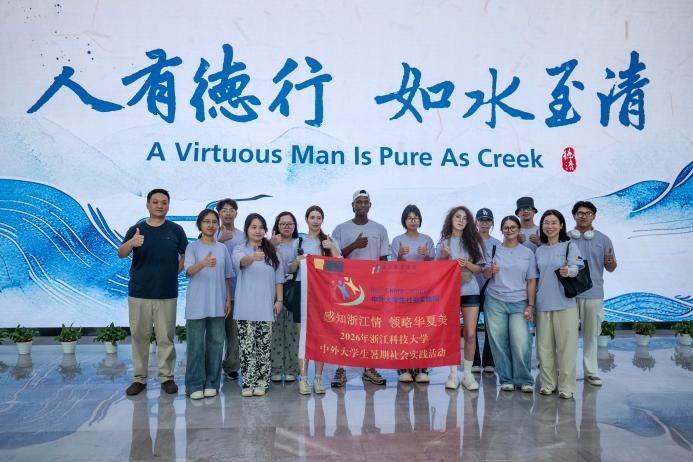
On July 15, 2026, the “Experiencing Zhejiang, Savouring China” Summer Social Practice Group of Zhejiang University of Science and Technology headed for Deqing County, Huzhou City. Supported by the Communist Youth League Deqing County Committee, the team launched an immersive research-and-learning programme. Six international students from Romania, Mexico, Morocco and other countries, together with Chinese students from the School of Art, Design and Fashion, visited Deqing Urban Exhibition Hall, Yuping Community (Wuyang Sub-district), Yecaoji in Dengta Village and the Water-History Museum in Zhangluwan Village (Luoshe Town). From four dimensions — urban public services, smart community governance, new-form rural industries and water-conservancy popular-science education — they witnessed first-hand the remarkable achievements of Deqing’s high-quality development.
01 Transformed Public-Welfare Landmark: A New Benchmark for Urban Public Services
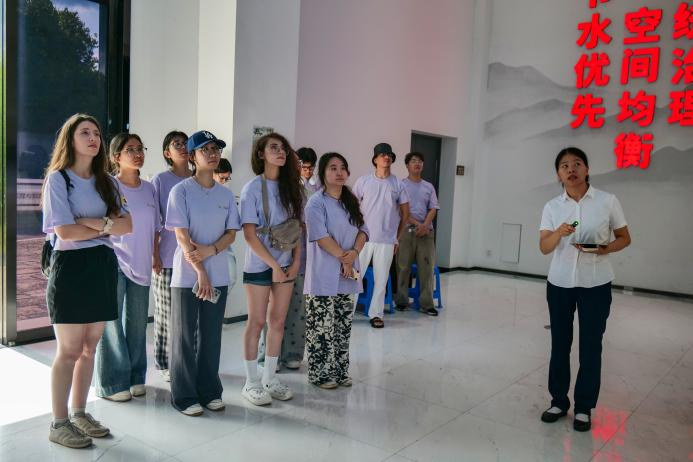
The practice group kicked off its tour at Deqing Urban Exhibition Hall. As a key people-benefiting landmark built in the post-Asian-Games era, the venue integrates urban exhibition, cultural reading, youth study-tour activities and sports-leisure functions, epitomising Deqing’s upgraded public-service system. Chinese and international students held in-depth discussions with the guide, gaining tangible insights into Deqing’s solid progress in the integrated development of urban planning, industrial layout and livelihood services. TRONCOSO ZALDIVAR EMILIA (Emilia), a Mexican student, commented: “This exhibition hall beautifully blends local cultural heritage with modern technology. It has allowed me to truly appreciate the unique charm of Zhejiang’s urban construction, where tradition and the future intertwine.”
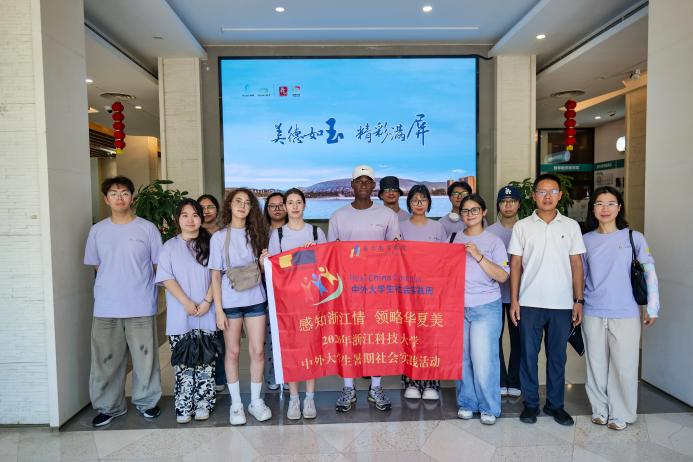
02 Smart Grid-Based Governance: Exploring a New Model for Future-Oriented Community Administration
Heading to the front line of grassroots governance, the group visited Yuping Community in Wuyang Sub-district to observe vibrant practices of resident self-governance and explore the “Zhejiang Experience” of digitally-empowered urban governance. Li Dong, Party-branch Secretary and Director of the Community Committee, gave a detailed introduction to how Yuping Community has built a refined, human-centred modern service system under its smart-governance framework. EMANUEL JORGE DE BARROS BARBOSA (Bajou), a student from Guinea-Bissau, exclaimed: “It is amazing that one single community runs such diverse volunteer-service programme with intelligent governance tools. The comprehensive and thoughtful public services must bring residents a strong sense of well-being.”
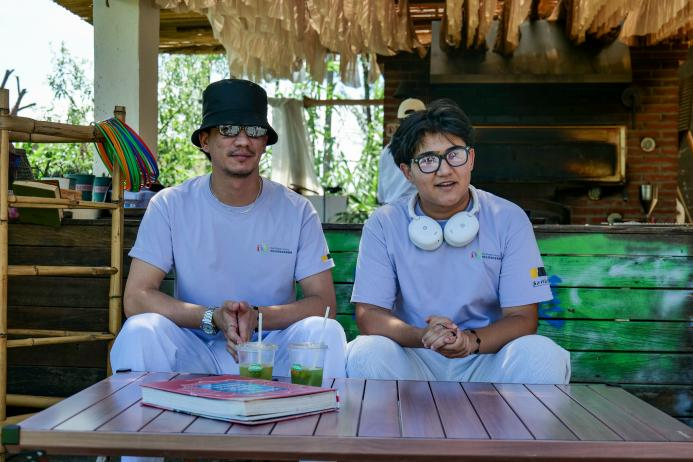
03 Home-Returning Youth Revitalize Countryside: New Cultural-and-Tourism Business Models Pave the Way for Rural Prosperity
Young vitality fuels rural development. The practice group visited Shixu · Yecaoji in Dengta Village, a prime example of new-style rural cultural tourism created by returning young entrepreneurs. As one of Deqing’s well-known village-side coffee sites, its founder shared with the team the ideas and behind-the-scenes stories covering site-selection, design and daily operation. PETRIA DENISA-ANDREEA (Qu Peihan), a Romanian student, shared her thoughts: “Talented young people bring innovative ideas back to their hometowns, turning lucid waters and lush mountains into invaluable assets and helping local villagers increase their income. This is the most touching story of rural revitalisation.”
04 Learning Water-Control History in One Museum: Water-Conservancy Science Popularization Fosters Harmony Between Humans and Water
The group then toured the water-history popular-science park at the modern water-conservancy demonstration zone in Zhangluwan Village, Luoshe Town. Its digital exhibition halls, ecological display zones and winding waterways form a harmonious whole, offering visitors an intuitive understanding of Deqing’s flood-control and drainage system and the fruitful outcomes of its aquatic-ecology restoration projects. International students spoke highly of the site: “Deqing safeguards the water security of the Hangjiahu Plain through systematic water-conservancy projects and uses technological advances to conserve river and lake ecosystems. It sets an excellent example for China’s aquatic ecological-civilization development!”
From urban landmarks and smart communities to rural cultural-tourism ventures and water-conservancy education bases, Chinese and international students broadened their horizons and drew inspiration throughout their field trip. International participants acted as cultural ambassadors, documenting the brand-new landscape of county-level urban-rural integrated development through their firsthand experience, and adding fresh youthful narratives to cross-cultural exchanges between China and the world. Far more than an on-site classroom for international students to deepen their understanding of Zhejiang, this study tour serves as a bright window through which the world may gain a better picture of China’s new-era urban-rural development.
SOIE OF ZUST
July 18, 2026